Why Mt. Shasta Should Be Your First 14,000ft Ski Descent
By Ben Harclerode
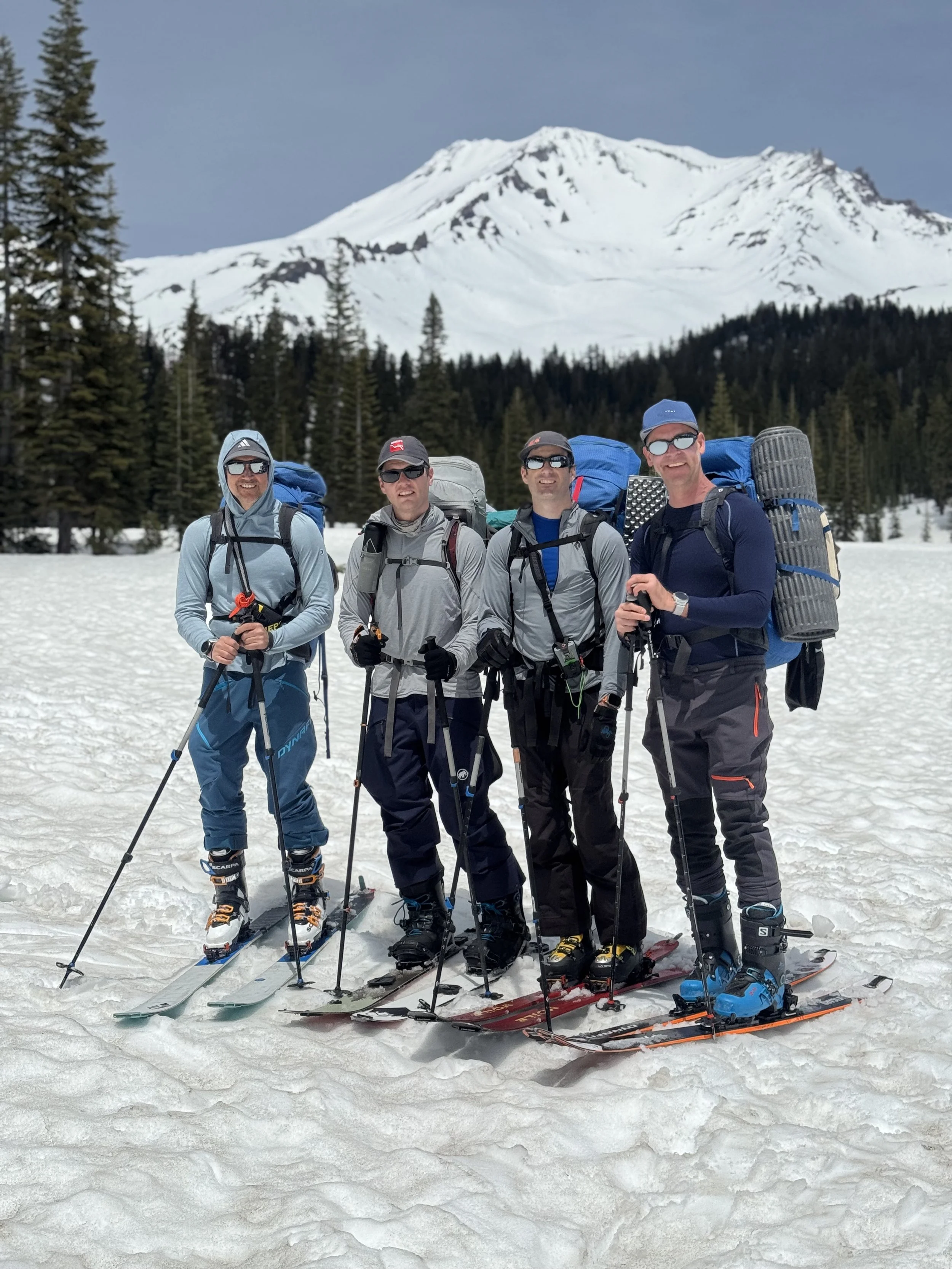
There is, in my humble opinion, nothing more awesome than ski mountaineering. I mean, come on. Climbing to the top of a mountain, clicking into your skis, and ripping turns the whole way back down to the car—then looking up in awe and wonder at the behemoth you just conquered? (Maybe there's a cooler of cold drinks waiting for you and your buddies in the parking lot?) Few things, I argue, will truly make you feel as alive as what I just described. Combining the skill sets of both advanced backcountry skiing and winter mountaineering, it's an activity with a high technical barrier, but also a very high level of personal reward. Mount Shasta is the perfect arena to put the skills together for your first time (or your fifth time), and snag one of those descents of legend that you'll likely be telling your friends and family about for years to come.
Standing tall at 14,179 feet, Mt. Shasta is one of the southernmost peaks and the second tallest in the Cascades, as well as the fifth tallest peak in California. Together with its satellite cone, Shastina, this massive formation dominates the landscape as far as the eye can see—in fact, you can see it all the way from its southern counterpart, Mt. Lassen, some 100 miles away. Mt. Shasta is a real-deal 14,000-foot peak with the whole package you'd expect from a big mountain climb and ski. However, the access, which is much shorter than many of the other peaks throughout the Cascades, as well as its long, uninterrupted ski descents of up to 8,000 feet, are truly what makes this one of the crown jewels of California skiing.
Often until May, you can park at the trailhead, put your skis on at the car, walk to the top, and ski 7,000–8,000 feet of perfect, buttery corn snow right back to where you started. There aren't many peaks like it out there, which is why, if you're a serious backcountry skier, you simply must ski it. And then you'll probably ski it again and again, because it really is that good.
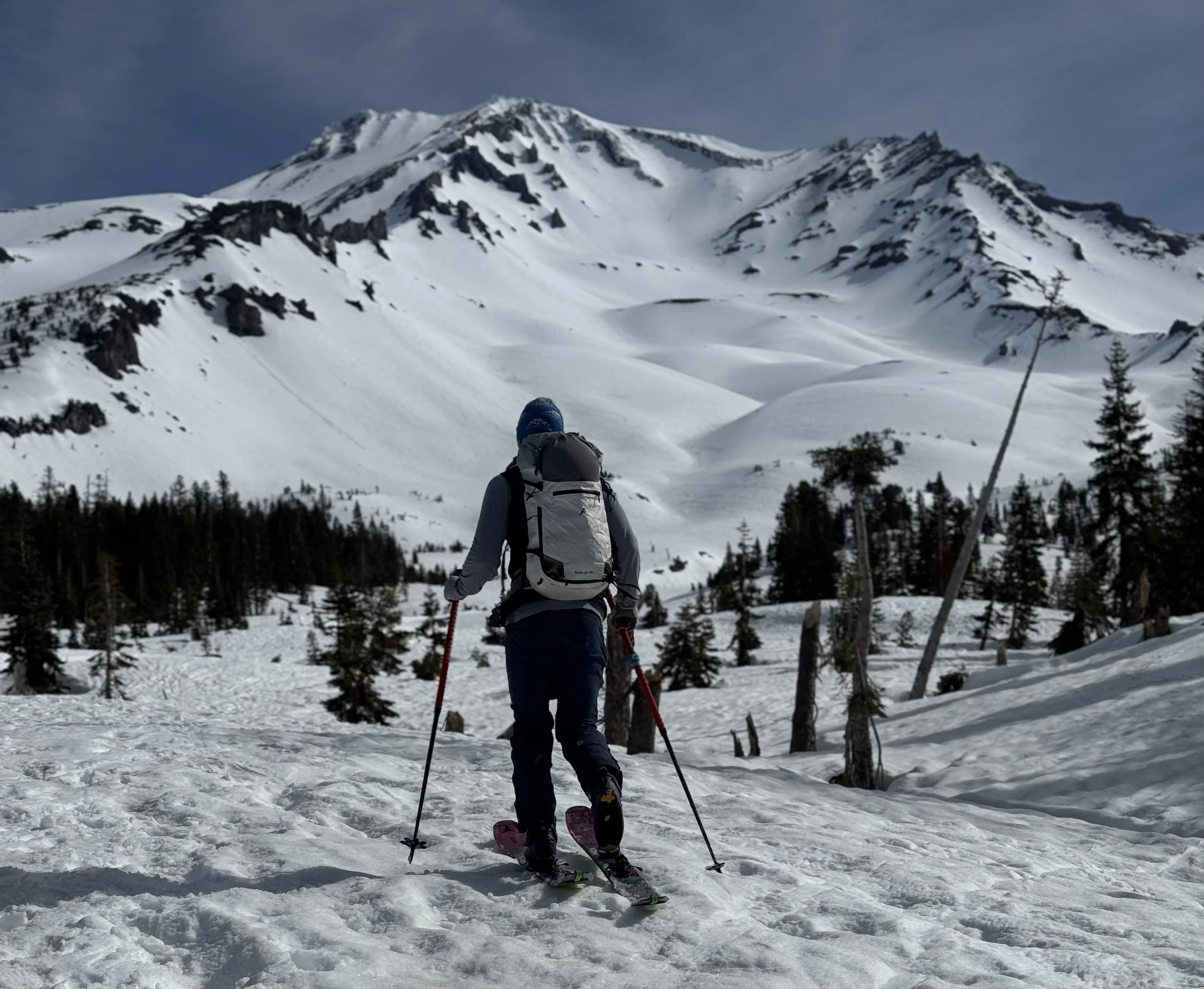
So why should you start with Shasta? Well to start the skiing is absolutely stellar. Not many ski descents can boast 7000 ft of continuous fall line skiing, which is an experience that will really make you understand why we spend all morning climbing for a really good single ski run. Outside of the really fun part, ski mountaineering is a progression. You don't want to start with the most technical objective you can find that's well above your pay grade, ending your day feeling like you were lucky to walk away unscathed. As you begin this objectively hazardous sport, it's always better to start with wider margins, and that's exactly what this wonderful mountain allows us to do. This is the perfect peak to establish your ski mountaineering baseline and set yourself up for a future of success in the mountains. This unique alpine environment allows you to really hone your skills at your own comfort level, rather than doing so 15 miles away from a trailhead where support is far away and an emergency evacuation is not easy.
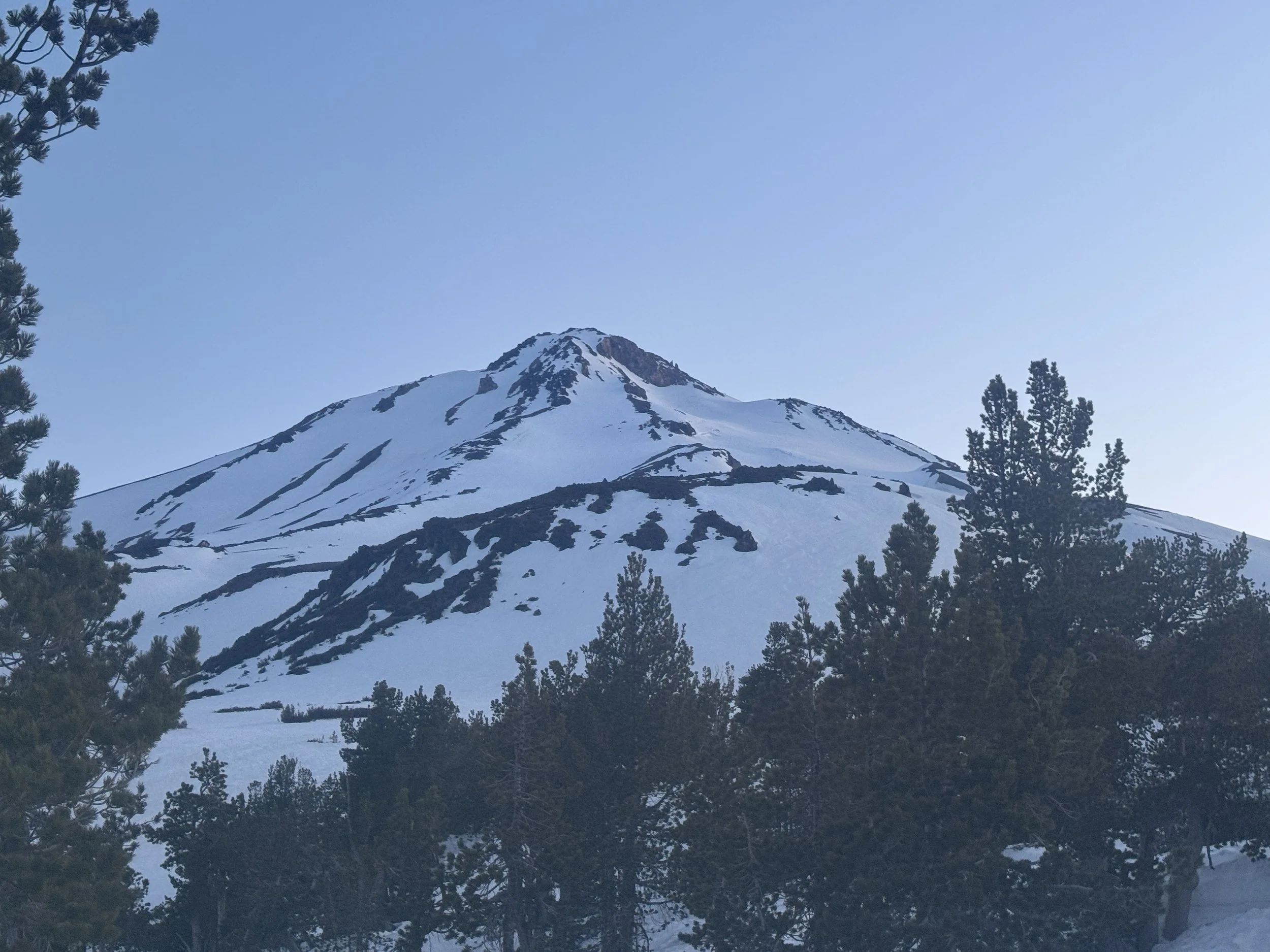
Here are 8 reasons why we think Shasta is the perfect first 14,000 foot ski descent for folks, as well as what makes this mountain so much fun to return to every year.
ACCESS
The access alone makes this a much more digestible, lower-commitment objective than other similar Cascade ski descents. Both the approach and the egress are easier and less committing than a lot of other similar mountains out there.
TECHNICALITY OF TERRAIN
Next, Shasta is the perfect place to really gain your bearings with steep snow climbing technique. Many mountains will involve pitches of technical, potentially mixed rock/snow/ice climbing to tag the summit, adding another layer of challenge and technical requirement to the equation. Not Shasta. Its consistent, planar slopes provide several thousand feet of beginner-to-intermediate 30–40-degree terrain to learn and work your steep snow climbing technique.
CHALLENGE LEVEL OF SKI TERRAIN
Shasta provides some of the most pleasant ski terrain you may ever find on a 14,000-foot peak. If you time it right, you may find yourself giggling down 7,000 feet of perfect 30–40-degree California corn skiing. It is certainly steep enough to feel serious and deliver the full experience of skiing a big mountain, but you can easily avoid higher-consequence, exposed lines on your first Shasta descent (this is where hiring a guide can really help). No tight couloir skiing, navigating downslope cliff bands, or crevasse fall hazard here is required for your first Shasta run, although you can find it all on the mountain if you know what you're looking for.
GLACIATED TERRAIN
The technical barrier of glacier skills and crevasse rescue can be quite daunting to newer mountain travelers. Although the north side of the mountain does have a large assortment of glaciated terrain, the standard routes—Avalanche Gulch on the south and West Face on the west—are devoid of glacial terrain and crevasse fall hazard. Just one more thing you don't have to worry about, so you can simply focus on getting up and down the mountain.
BAILING
What if I get altitude sickness? What if I'm just not feeling it that day? What if unexpected, volatile weather comes in and we need to get off the mountain in a hurry? Remember the access piece at the top of the list? It also makes unexpected exit scenarios much easier to manage, as we just turn around and ski back down to the car.
VARIATION
There is truly something for everybody on this mountain, skiers and climbers alike. Multiple lines down the south, west, north, and east faces of the mountain, as well as Shasta's little sister, Shastina, make for ski descents of all interest and skill levels.
SKI QUALITY
If you’ve ever heard of California corn skiing, this is the absolute epitome of it. Just the right amount of soft surface snow with a supportable base underneath makes for some of the most enjoyable, knuckle dragging downhill conditions imaginable. If you really nail it with weather and timing, the ski quality is nothing short of world-class and the experience euphoric. Sure, the climbing can be challenging but in perfect spring conditions, skiing Mt. Shasta is as close to type 1 fun you are ever going to have in the mountains.
SCALABILTY/REPEATABILITY
The sheer volume of quality ski lines off of this mountain is inspiring enough to make you want to keep coming back for more to tick another one off the list. There's a reason many strangers you'll meet skiing on Shasta are not on their first, but their fourth—or whatever number it may be.
If you've read between the lines up to this point, you may have gathered that there are easier lines and harder lines to ski on Shasta. This gives you the ability to scale the exposure and technical challenge over several different descents, increasing your skill and confidence as a ski mountaineer over time and experience. This isn't a mountain with one descent option you just ski once to say you did it (cough cough, Mt. Whitney)—this is a mountain with a plethora of terrain that almost seems like it was created to be skied over and over and over again.